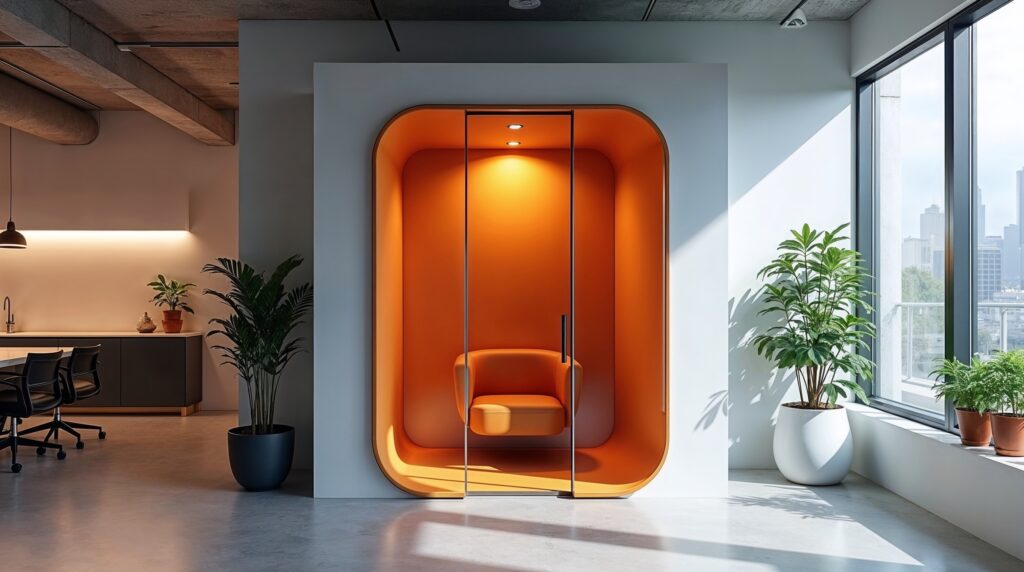
Sound shapes how we work, how we think, how we feel. In offices, restaurants, or museums, the acoustic environment is constantly influencing focus, mood, communication, and well-being. Yet it’s one of the most overlooked aspects of interior design. We call this gap in awareness the acoustic blind spot. We’re here to close it.
Absari
Looven
Zuyder
Reeda
Why Focus on Sound? Here are five reasons to prioritize acoustics in your next project:
As rooms get bigger, ceilings get higher, and work becomes more open and collaborative, sound behaves differently. It bounces. It overlaps. It builds pressure. And that’s when sound becomes noise — a form of pollution that saps concentration, increases stress, and disconnects people from their surroundings.
This isn’t just a theory. Studies show that poor acoustic environments directly reduce productivity, communication accuracy, and overall workplace satisfaction. In education and healthcare settings, the effects are even more critical — impacting recovery, learning, and cognitive performance.
And the solution isn’t just to absorb everything. Good acoustics are about balance, not silence. They’re about creating spaces where sound feels natural — where voices are clear, distractions fade, and the atmosphere supports the purpose of the space.
Improve Productivity Noise disrupts concentration and deep work. Reducing distractions helps teams stay focused and get more done.
Enhance Communication In clearer sound environments, people understand each other better — whether in meetings, customer interactions, or casual conversations.
Reduce Stress Continuous noise exposure leads to mental fatigue. A calm acoustic environment helps people feel more relaxed and at ease.
Support Well-Being Good sound quality improves overall indoor comfort — just like fresh air or natural light.
What You Can Do
The good news? You don’t need to redesign your building to improve its acoustics.
By using the right combinations of materials and forms, you can transform the way a space feels and functions — both acoustically and aesthetically.
Here are four core strategies we use in acoustic design:
Reduce Sound Minimize the source of disruptive sound at its origin. Choose materials that dampen movement, muffle footfall, and limit mechanical noise. For example, acoustic flooring or carpets can dramatically reduce impact sound in high-traffic areas. Similarly, using furniture with soft upholstery or felt-wrapped surfaces helps lower overall noise buildup without changing the layout. Simple fix: swap hard furniture surfaces for textile or acoustic versions to soften the soundscape.
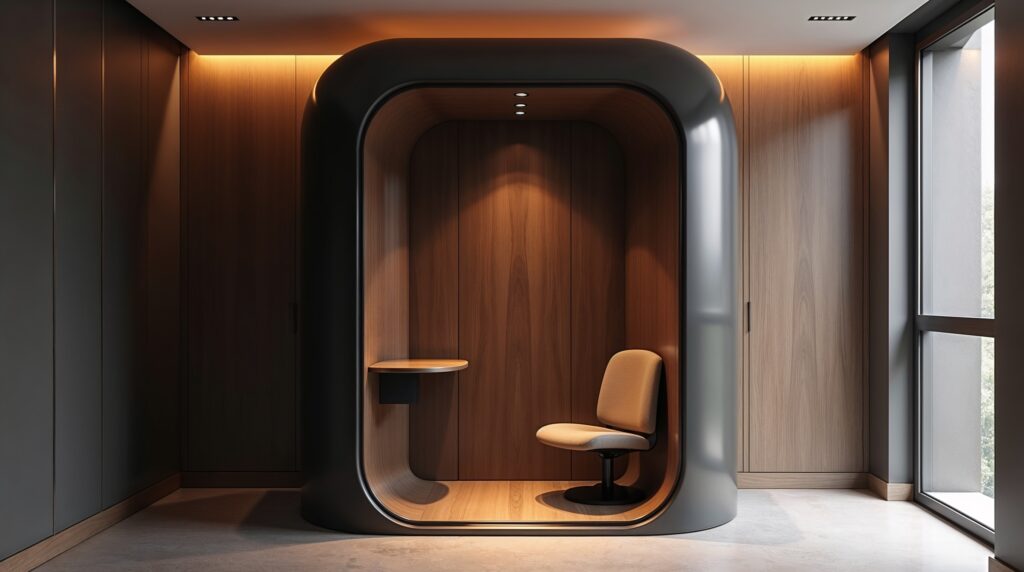
Block Sound Create separation between noisy and quiet zones. Sound-blocking is about isolation — using barriers to stop sound from traveling. High-backed sofas, phone booths, work pods, and partition walls all help contain noise in active areas and shield quieter zones for focused work or private conversations.
Design tip: Think of these as mobile architecture. They don’t just divide space — they sculpt it.
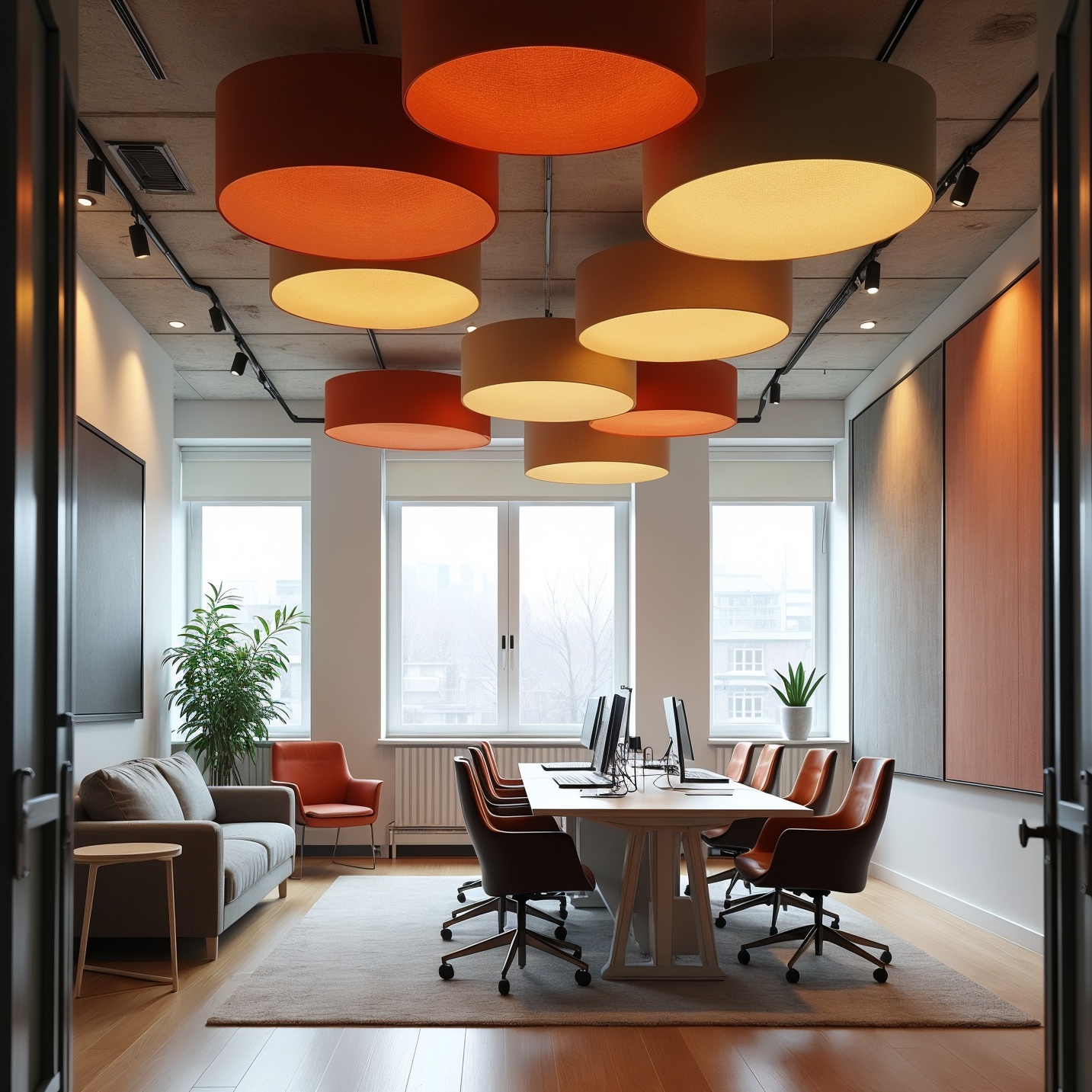
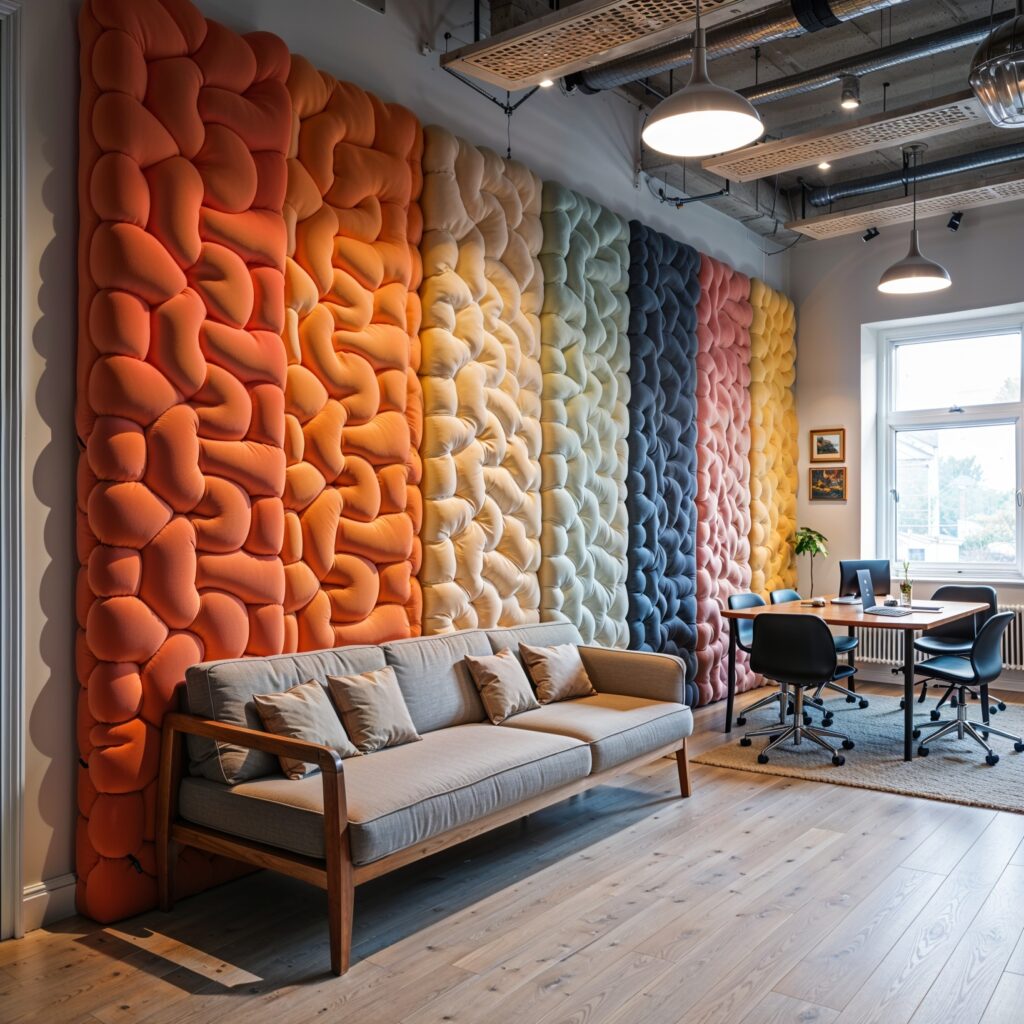
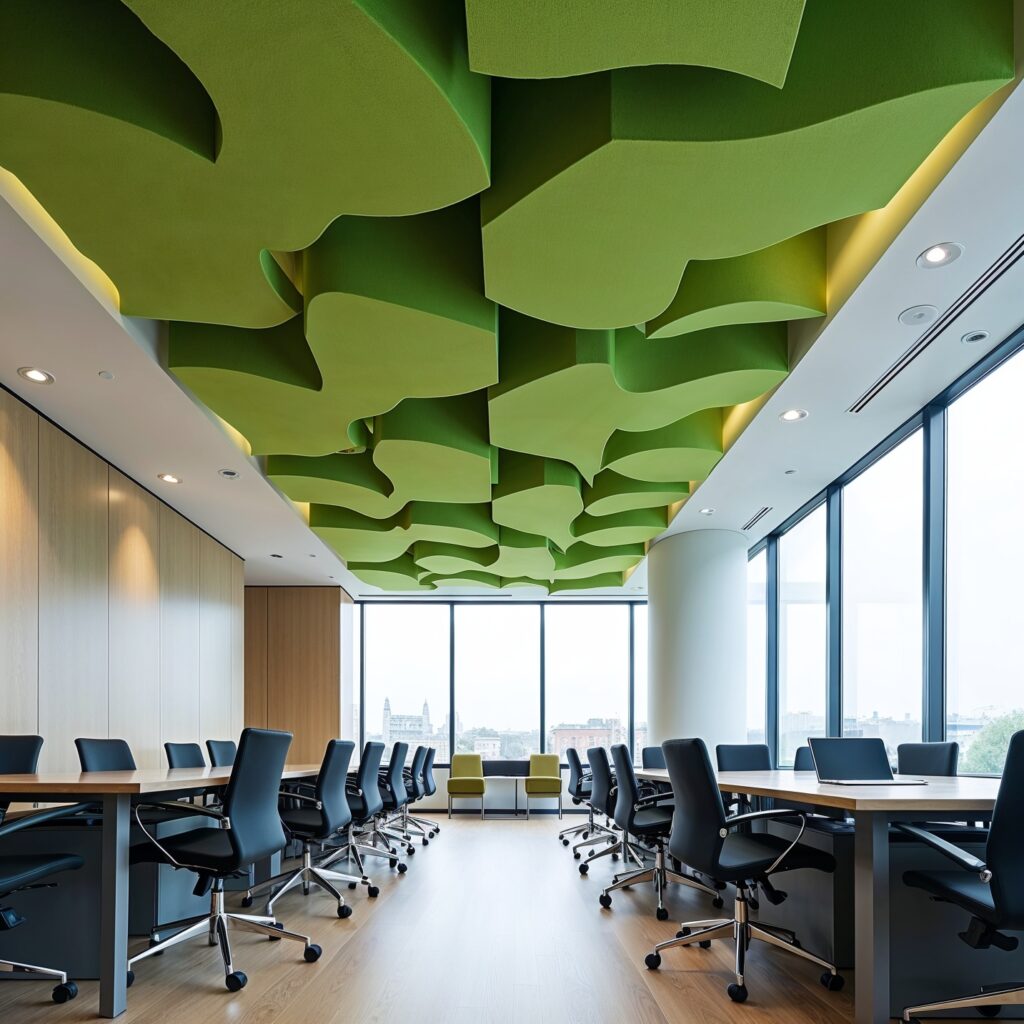
Absorb Sound Capture sound waves to reduce echo and reverberation. This is the most common acoustic intervention — and one of the most effective. Wall panels, ceiling absorbers, and screens made from acoustic materials soak up sound, creating a calmer, more controlled environment. These can be subtly integrated or act as bold design elements.
Smart layering: use ceiling, wall, and furniture-based absorption together for maximum impact.
Diffuse Sound Scatter sound evenly throughout a room. Diffusion helps break up concentrated sound energy, preventing hotspots or dead zones. This technique is especially valuable in creative spaces, studios, and public venues. Acoustic diffusers are often sculptural in form — offering both function and visual texture.
Best use: combine diffusion with absorption to keep energy without creating echo.
It’s Not One Thing. It’s the Right Combination. Every space is different. That’s why we start every project by understanding its purpose, layout, and people — then layer in the right acoustic strategies using modular elements from our product collection. Acoustics shouldn’t be an afterthought.
Sound Pollution & Its Consequences
You can’t see it — but you can feel it. Sound pollution doesn’t leave dust behind. It doesn’t stain the walls. It doesn’t flicker like bad lighting or pile up like clutter. But it still pollutes the room — and your experience of it. In acoustically poor environments, stress builds without warning.
You talk louder. Think slower. Get distracted more easily. Focus drains. Communication breaks down. And yet, people often blame the layout, the furniture, or the people around them — never realizing that the problem is simply too much unmanaged sound.
This problem is growing. Open-plan offices, exposed ceilings, minimal surfaces, and multipurpose spaces may look beautiful — but they bounce sound aggressively. Add people, meetings, devices, and background noise, and you’ve got an atmosphere that’s working against productivity, creativity, and well-being.
Here’s what the science (and common sense) tells us:
Noise Kills Focus Even low levels of background noise can disrupt concentration, making it harder to complete tasks that require memory or deep thinking.
It Undermines Communication Poor acoustics create misunderstandings. Whether it’s in a sales conversation, a team meeting, or a hospital corridor — unclear speech has real consequences.
It Increases Stress The brain works overtime in noisy environments, filtering and adjusting. That constant strain leads to fatigue, irritability, and burnout — especially in fast-paced workplaces.
It’s a Barrier to Inclusion People with hearing sensitivities, neurodivergent conditions, or second-language fluency are disproportionately affected by noisy environments. Better acoustics mean more inclusive spaces.
It Has a Long-Term Cost Unresolved acoustic issues reduce employee satisfaction, increase turnover, and hurt brand perception. Fixing it early is faster, smarter, and more cost-effective than redoing it later.
Good acoustics aren’t a luxury. They’re a foundation for how people work, learn, recover, connect, and stay. And the consequences of neglecting them compound over time. The solution doesn’t need to be complicated, but it does need to be intentional.
Every space is unique — and so is every solution. Whether you’re in early planning or ready to build, we’re here to help you shape an environment that sounds as good as it looks. Reach out to explore possibilities, get advice, or request a quote.